Species profile
Common Blackbird
Turdus merula cabrerae · Hartert, 1901
· Updated 29 March 2024
Recommended birdwatching tours to watch this bird
Half-day birdwatching
Common Blackbird Field ID Keys
Shape & Size
Medium-sized thrush with short bill and short legs.
Colour Pattern
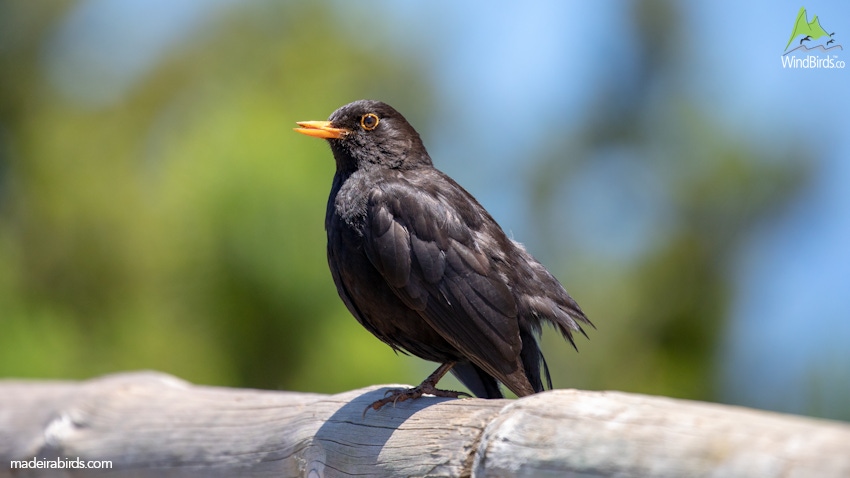
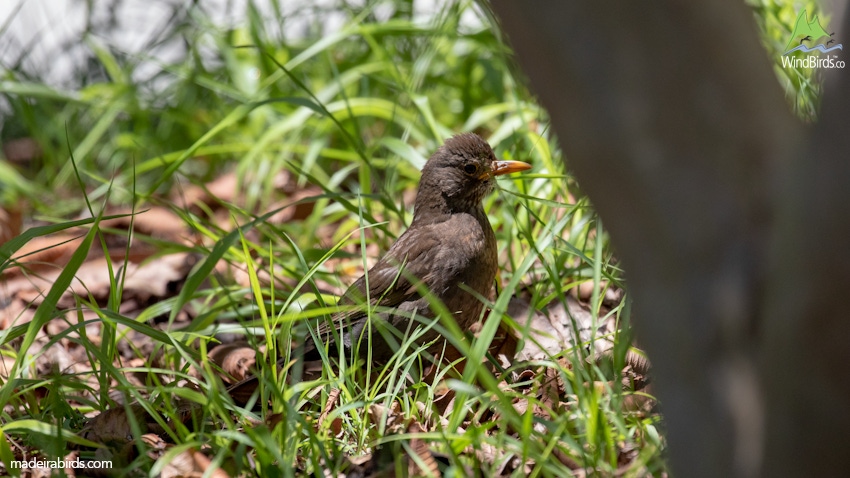
The male is uniformly black with an orangey beak and eye ring while the body of the female is brownish, with small, lighter-coloured specks on the chest and a darker bill.
Behavior
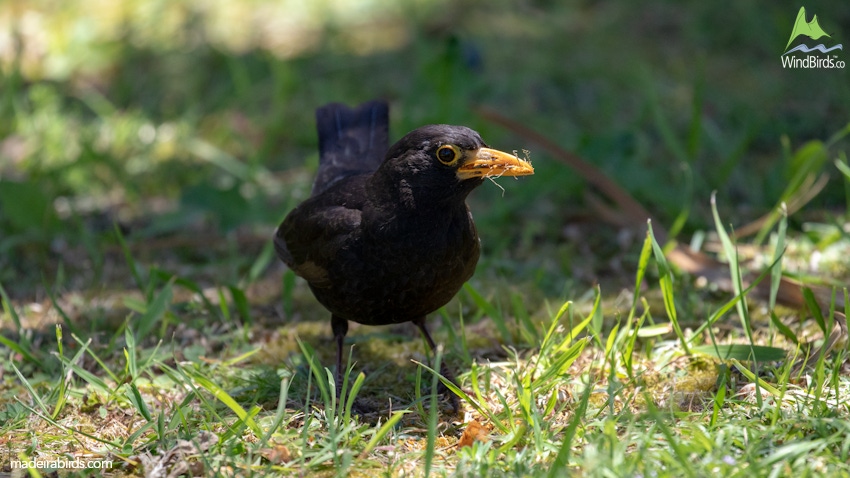
Spends most of the time on the feeding on ground near cover. Its flight is usually low and quick, swooping into cover.
Habitat
The habitat of the Blackbird ranges from forest to urban areas and includes farmlands, gardens and high-altitude vegetation. The only type of habitat where this species does not occur is in areas of no vegetation.
A very common bird throughout the island of Madeira, but with not so many individuals in Porto Santo.
Distinction from similar species
The Blackbird of Madeira and Porto Santo differs from its congener by being darker and smaller and, as this difference is also in the Canary Islands it is, therefore, an endemic subspecies of Macaronesia.
Turdus merula Biometrics
Wingspan: 34 - 38 cm (Hume, 2002)
Total length: 24 - 25 cm (Beaman & Madge, 2011)
Weight: 80 - 110 g (Hume, 2002)
Other Bird Facts
Seasonality in Madeira: All year
Breeding: On a grass and mud cup base with twigs as structure, built low in vegetation, 3 to 5 eggs are generally laid on each of up to 4 broods between March and August, though the season varies with altitude, as breeding occurs later at higher altitudes.
Diet: Feeds on worms, insects and invertebrates of all kind in the ground, also eats berries and fruits in bushes.
Status
Madeira local status by Correia-Fagundes et al, 2021: Very common breeding bird
Madeira local status by Romano et al, 2010: Very Common breeding bird
Madeira local status by Zino et al, 1995: Very Common breeding bird
Conservation status by the IUCN Red List Categories, 2013: Least Concern ver 3.1
Name of this species in other languages
Portuguese: Melro-preto, Melro
German: Amsel-cabrerae, Amsel
Dutch: Merel
Swedish: Koltrast
Danish: Solsort
Finish: Mustarastas
Norwegian: Svarttrost
Spanish: Mirlo Común
French: Merle noir
Italian: Merlo
Polish: Kos
Slovak: Drozd čierny
Czech: Kos černý