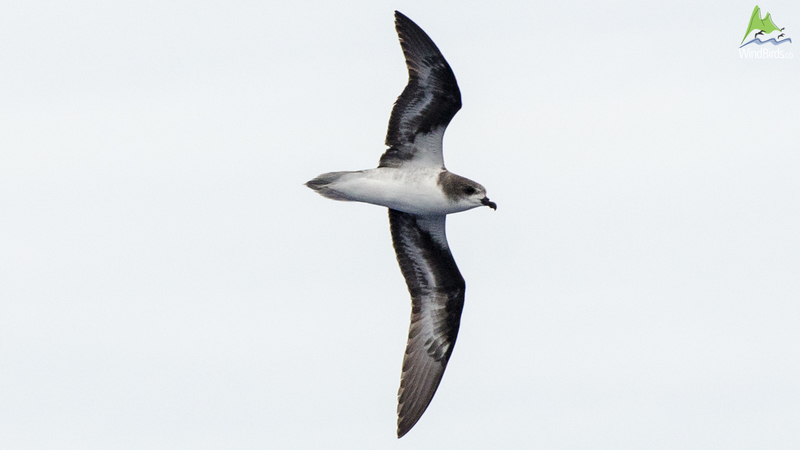
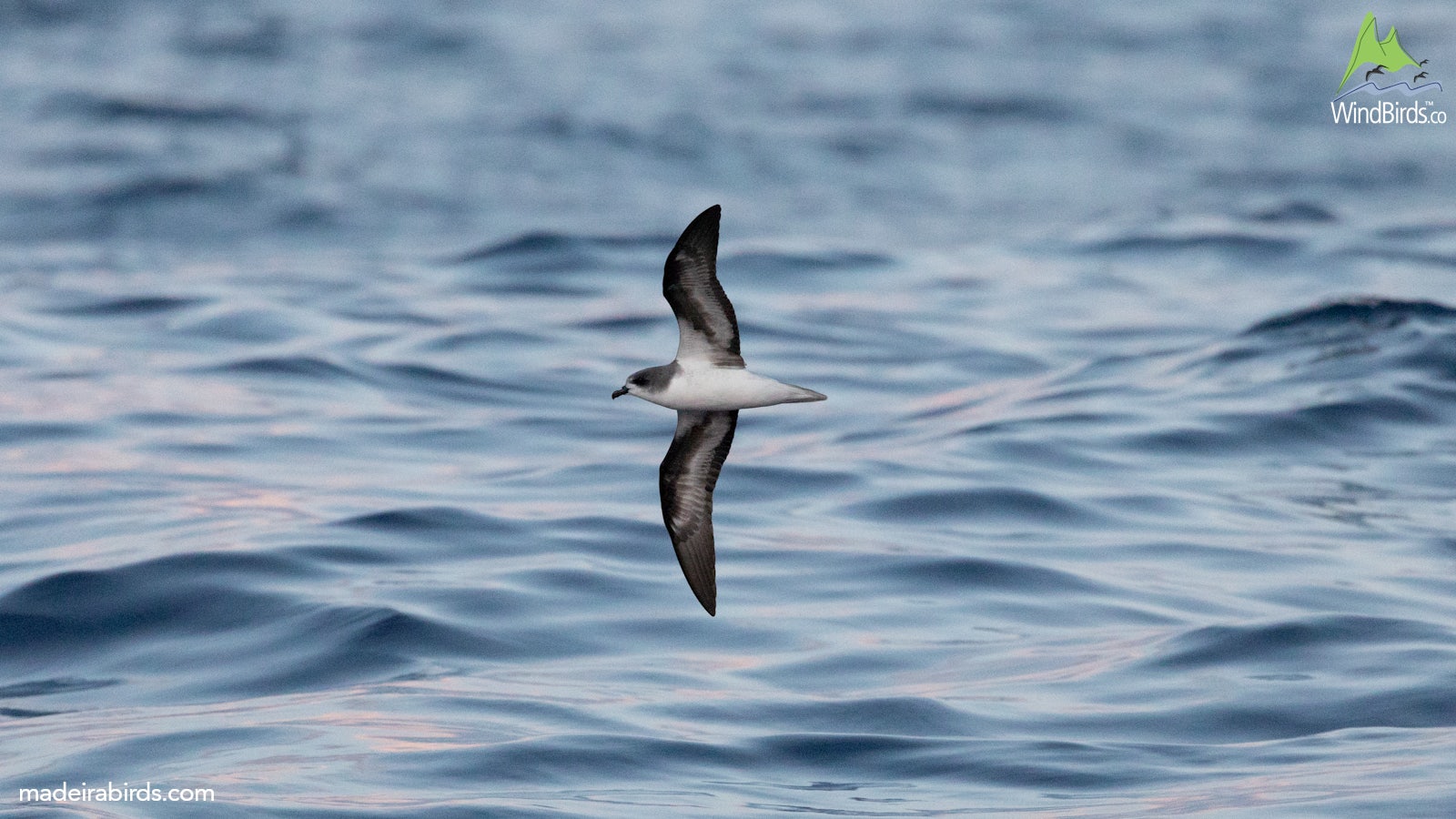
Zino's Petrel Pterodroma madeira Mathews, 1934
Order: Procellariiformes Family: Procellariidae Status: Breeding in Madeira
Recommended birdwatching tours and sea trips to watch this seabird
Zino's Night Expedition *Visits to the breeding site require a permit and daily clearance. Wind Birds holds such permit.
Zino's Petrel Pelagic Expedition

Pterodroma madeira brief history
Zino's Petrel Pterodroma madeira, an endemic seabird of Madeira, is regarded as one of the most endangered seabirds of Europe. It only breeds on the island of Madeira and nests in extremely steep ridges of the central mountainous massif.
The reason this species was named Freira (which means 'nun' in English) lies in the fact that these birds' breeding colony is up in the mountains above Curral das Freiras (Nun's Valley) and, as they have white underparts and a grey mantle, they seemed to wear the same vests of the Nuns from Santa Clara Convent who had taken refuge in that valley from pirate attacks back in 1566.
Zino's Petrels, during their nocturnal visits to their nests, emit calls that sound like wails. For many years these sounds were interpreted by the inhabitants of Curral das Freiras as being the calls of the suffering souls of the shepherds who died on those mountains.
This species was first described in 1903 by a German naturalist priest, Ernst Schmitz. In 1951 Jerry Maul from the Municipal Museum of Funchal, known now as the Natural History Museum of Funchal, collected a specimen which was later considered the last trail of the existence of this species for the following 18 years. In the sixties, the ornithologist Paul Alexander Zino made several attempts to find some evidence of the species but only at the end of that decade, he manage to re-track Zino's Petrel.
In 1987, after observing that several eggs and young birds showed signs of predation, a conservation program was designed aiming to reduce and control the main predators of the species (rats and cats). This program was coordinated by the Freira Conservation Project and assisted by Madeira Natural Park and the Natural History Museum of Funchal.
Nowadays the IFCN - Institute of Forests and Nature Conservation (previously known as Madeira Natural Park) is at the head of the project and the activities which aim to conserve this species through the recuperation of its breeding habitat are co-financed by the Life-Nature Program.
Zino's Petrel Field ID Keys
Shape & Size
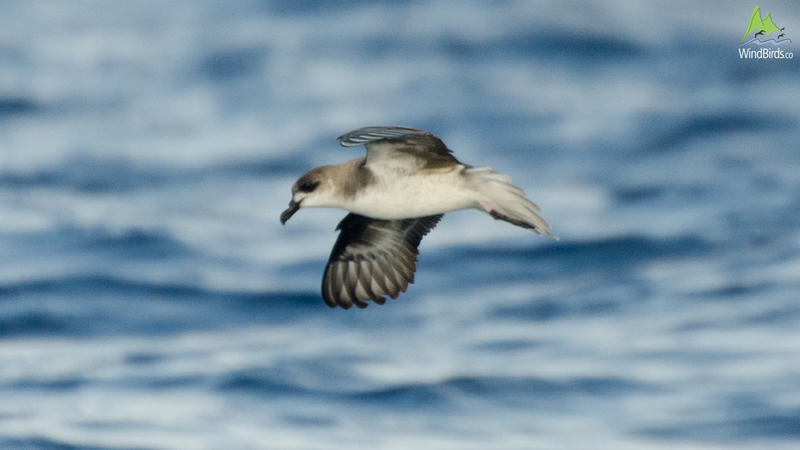
A medium-small seabird with a slim body and a proportionally small and thin bill which is a distinguishing feature when compared to Fea's or Desertas Petrel.
Colour Pattern
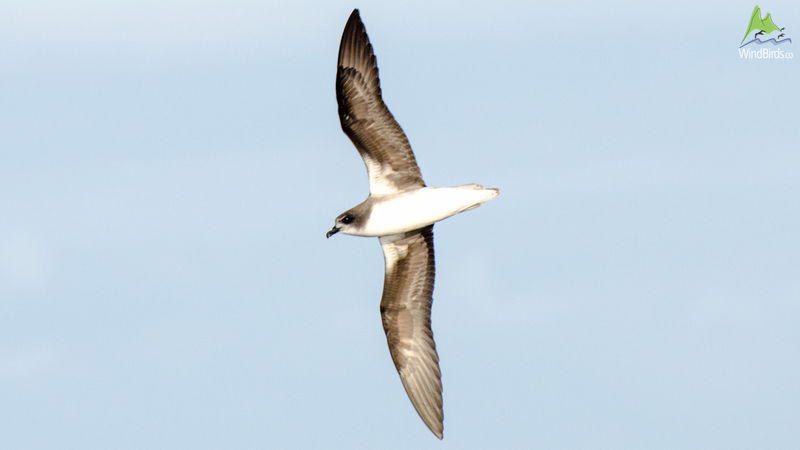
Zino’s Petrels’ wings and back are dark grey, with white underparts and a grey tail. It has an incomplete grey breast band and normally shows a lot of white on its underwings.
Behavior
It has a rapid flight, sweeping up in the wind and then rapidly down again with a marked “W” angulation of the wings.
Habitat
This species come inshore only at night and nest in the high central mountain massif. Where they go in the non-breeding season is not known. Pterodromas can be seen at sea off Madeira, but it takes a close and good observation to distinguish between Zino's and Desertas or Fea's Petrel. The Zino's Petrel Pelagic Expedition is the only birding trip where Zino's Petrels are normally watched and distinguished from its congener from the Desertas islands.
Distinction from similar species
Pterodroma madeira is not easily distinguished from Pterodroma feae/deserta though Zino’s is in general a smaller bird, more elegant, with whitish underwings and smaller bill. Desertas or Fea’s Petrels look more bulky bodied and the bill is very heavy when compared to the size of its head. The jizz is a good first impression to try to separate these seabird species with Zino’s flight being more agile, fast and with more aggressive turns than Fea’s Petrel. Though the comparative bill size is the most distinguishing feature.
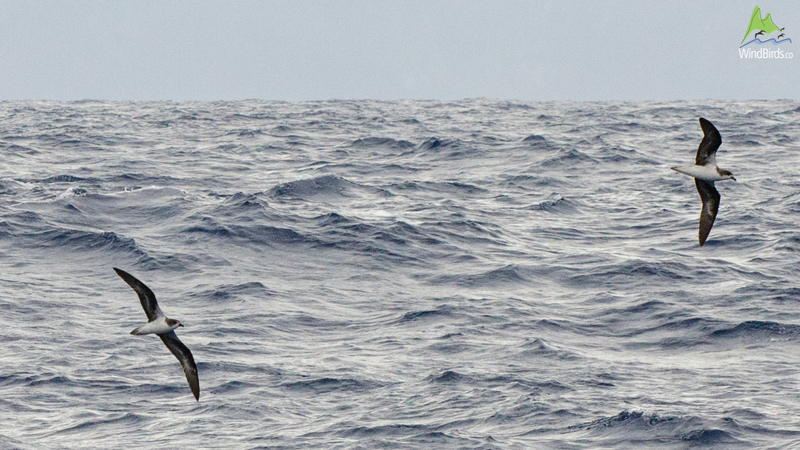
Pterodroma madeira Biometrics
Wingspan: 800 - 843 mm - average: 829 mm (Shirihai et al., 2010)
Total length: 300 - 350 mm - average: 331 mm (Shirihai et al., 2010)
Weight: 175 - 280 g - average: 212 g (Shirihai et al., 2010)
Length of bill: 22 - 26 mm - average: 25.00 mm (Zino & Zino, 1986)
Height of bill base: 10.5 - 12 mm - average: 11.19 mm (Zino & Zino, 1986)
Other Bird Facts
Seasonality in Madeira: This Madeira endemism is observed around Madeira and near its breeding colony between April and end of August.
Breeding: Breeding occurs in burrows on ledges in the high central mountain massif at about 1,600m. These ledges are not accessible to sheep and goats, which until recently overgrazed the area. About 40% of the flora on the breeding ledges is endemic.
The breeding birds start to return in late March and clean the burrows. The rudimentary nests are made with bits of grass in a chamber at the end of a burrow which may be 2m long and usually has an “elbow”, making access difficult. A single white egg is laid between mid-May and mid-June with hatching occurring at the end of July or beginning of August. The young fledge during the first three weeks of October.
Diet: From analysis to its vomit it feeds on squid, small fish and surface crustaceans.
Status
Madeira local status by Correia-Fagundes et al, 2021: Very rare breeding bird
Madeira local status by Romano et al, 2010: Very rare breeding bird
Madeira local status by Zino et al, 1995: Very rare breeding bird
Conservation status by the IUCN Red List Categories, 2016: Endangered D ver 3.1
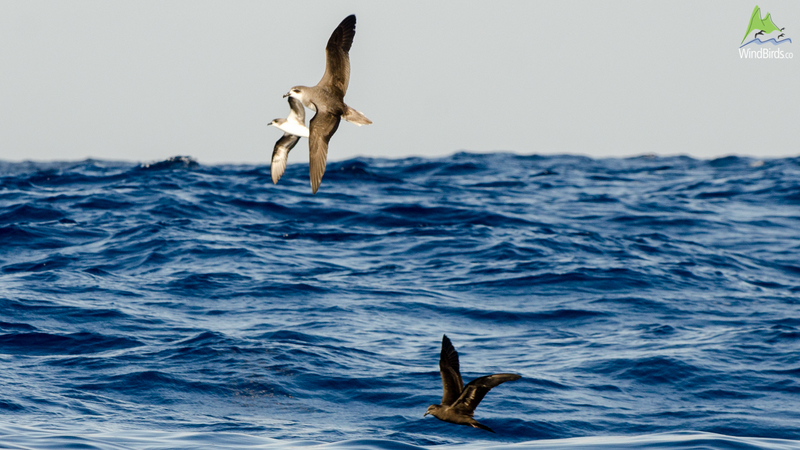
Some background on Zino's Petrel Pterodroma madeira, by Francis Zino
“Zino's Petrel, Pterodroma madeira, was first handled by the Priest Ernesto Schmitz in 1903 when a bird was brought to him from the mountains above Santo António. He had become a well-established naturalist and collector with a wide experience in ornithology. Despite this and rather surprisingly, he misidentified the bird as what we now call Fea's Petrel, Pterodroma feae, known to breed on Bugio, from where he had already collected several examples. Padre Schmitz left Madeira for the Holy Land in 1908 and Pterodroma madeira, Zino's Petrel (as it is now known) was lost from the sight of ornithologists, so much so, that by the late 50's many thought it to have become extinct.
In 1963, the Museu Municipal do Funchal, organised a scientific trip to the Selvagens Islands. On this trip, amongst others were two French ornithologists as well as Paul Alexander Zino (Alec) and his son Frank. These two Frenchmen awakened the interest in ornithology of Alec and Frank Zino. Over the following years, the Zinos and their French friends carried out many studies on the birds of the Archipelago. In 1967/8 Alec Zino and the French ornithologists made several trips to the area directly above Curral das Freiras to see if they could hear the calls of Zino's Petrel, but with no success. The idea that the birds had become extinct was again put forward.
Alexander Zino then reasoned that if a man of Schmitz's experience had not noted the difference between Zino's and Fea's Petrel, because they were so similar, even having them in the hand, then maybe their call was also similar. They started to interview shepherds from the area of Curral das Freiras and Areeiro. To these men he played the recordings, he had made on Bugio. After many interviews, he eventually found one man who said he knew the sounds. This was Lucas, who lived in Curral das Freiras and identified the sound as the wailing of the souls of shepherds who had died in the mountains. Lucas was able to tell them where he had heard these sounds and so, they walked down the path from Pico do Areeiro at night and eventually heard the sound they had longed to hear. Zino's Petrel was not extinct and they had rediscovered the area where it was breeding, in 1969.
From 1984 onwards, regular night visits and observations were made at Areeiro and the breeding ledges visited had signs of rats. In 1985, an egg, eaten by rats was found. There was no successful breeding by then.
The first Zino's Petrel ever ringed, was on the 12th June 1986, caught at night and ringed with ring Nº. J01150. Examination of the nests on the breeding ledges in the summer of 1986 showed that none of the young had survived, probably predated by rats. By the end of 1986, Alan Buckle and Andy Swash had worked out a system for protecting the birds from the rats and came out for a site inspection in 1987. They were amazed by the number of rats in the area and during their week in Madeira drew up a rat control scheme.
The group of people and institutions who had been working on the matter for years thus organised themselves into the Freira Conservation Project (FCP).
Since 1987 nests were controlled annually, many chicks were ringed and, as a result of the rat control carried out by FCP, by the last count in 2004, there were already nearly 80 couples of this species.”
Update to Pterodroma madeira background based on Zino & Biscoito, 2013
On the 13th of August 2010, a big fire reached Madeira’s central massif where Zino’s Petrel breeds. The horrendous devastation caused a total known death toll of 4 adults and 38 juveniles with only 1 chick known to survived these fires. (Zino & Biscoito, 2013).
The following years were not very encouraging. Although the Natural Park of Madeira (PNM - Parque Natural da Madeira) put artificial nests where there were previously known nests, the birds did not take them as expected. In 2011 on those previously known ledges and nests, on the 1st visit to the breeding grounds, 3 adults were found dead at the entrance of their nests and by the end of the season, only 16 juveniles were successfully produced. 2012 was even more disappointing as only 7 juveniles were ringed in the nests and 2 more were believed to fledge from a ledge which was too dangerous to access during the breeding season. (Zino & Biscoito, 2013)
Name of this species in other languages
Portuguese: Freira da Madeira
German: Madeira Sturmvogel
Dutch: Freira, Zino-donsstormvogel
Swedish: Madeirapetrell
Danish: Madeirapetrel
Finish: Madeiranviistäjä
Norwegian: Madeirapetrell
Spanish: Petrel Freira
French: Pètrel de Madère
Italian: Pterodroma di Madeira, Petrello di Madeira
Polish: Petrel Maderski
Slovak: Tajfúnnik Madeirský
Czech: Buřňák Madeirský
English synonyms: Madeira Petrel (not advisable to use as it makes confusion with Madeiran Storm Petrel, also called Madeiran Petrel)